
Why Does My Garage Door Open by Itself? 6 Causes and Fixes
Finding your garage door open when you thought you had closed it can leave you questioning what happened. Did someone press a remote? Did the door fail to close? Or is something wrong with the opener?
If you are asking, “Why does my garage door open by itself?” possible causes include a stuck remote button, faulty wall-control wiring, an unexpectedly programmed remote, a smart-access command, a closing reversal, or an electronic fault. The right fix depends on identifying which situation you are dealing with.
For homeowners in Wichita, KS, the first step is to observe the pattern safely. A door that opens after sitting fully closed needs a different investigation from one that starts closing and immediately reverses.
First, Check Whether the Door Opens Randomly or Reverses While Closing
Before replacing batteries or resetting the opener, note exactly what the door does.
Unexpected opening means the door was fully closed and stationary before it started opening without an intended command.
Closing reversal means the door began closing but changed direction before reaching the floor or immediately after touching it. This can involve the safety sensors, an obstruction, or incorrect travel settings.
Chamberlain explains that the safety sensor beam normally affects the door while it is closing. An interrupted beam is therefore a possible explanation for a closing reversal, rather than a general explanation for a fully closed door opening later.
Record useful details without repeatedly operating a malfunctioning door:
- Was the door completely closed before it opened?
- Did someone handle a remote or enter a vehicle?
- Did the opener lights flash?
- Did the problem begin after programming a new remote?
- Does a connected app show activity at the same time?
These observations can help a technician narrow down the cause.
A Remote Button Is Stuck or Being Pressed Accidentally
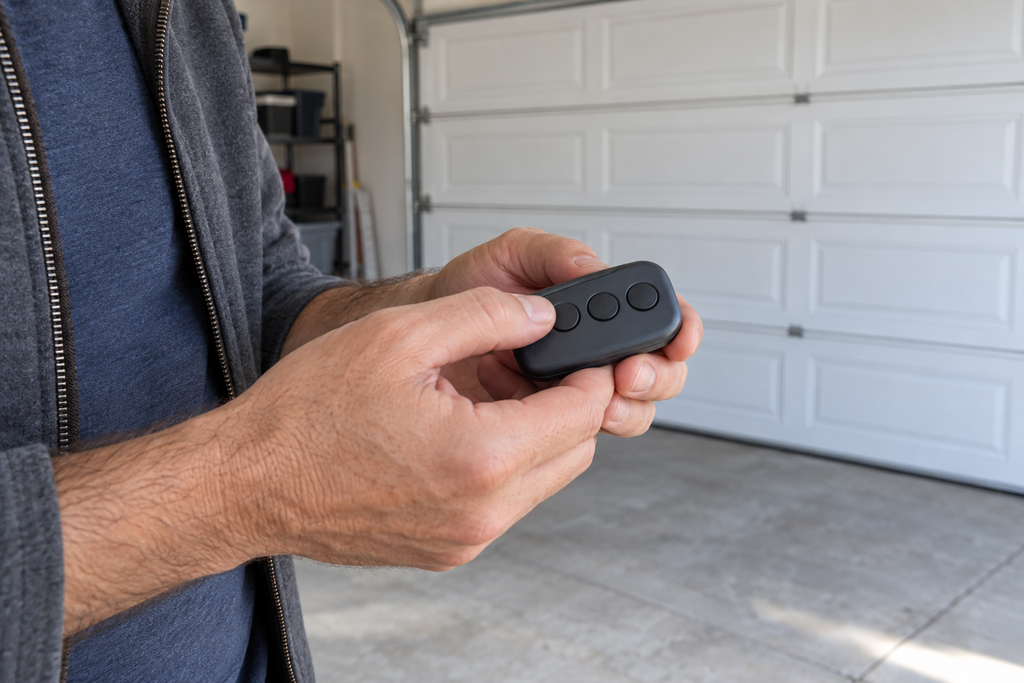
A remote can send an unintended command when its button sticks or another object presses against it. Check remotes stored in drawers, bags, vehicles, and places where children can reach them.
Chamberlain lists a stuck remote button among the possible reasons a garage door activates on its own. Its troubleshooting guidance also identifies unexpectedly programmed remotes and faulty wall controls as possible causes.
What to check and how to fix it
Inspect each handheld remote for a damaged case or a button that does not release normally. Move remotes away from loose objects that could press them.
Temporarily removing the batteries from a suspected remote can help isolate it. Make sure you have another reliable way to enter your home before doing this. If the problem stops, that remote becomes a likely suspect, although an intermittent fault may require further investigation.
Replace a damaged remote with a compatible model and follow the opener manufacturer’s programming instructions.
A weak battery is worth addressing when a remote responds poorly, but do not assume it explains unexpected opening. Check for unintended button presses and physical damage first.
The Wall Control or Its Wiring Is Faulty
The wall-mounted button provides another route for commands to reach the opener. A defective control or shorted wiring can send an unintended activation signal.
Genie’s opener troubleshooting guidance identifies shorts in the wall button or its wires as a common cause of unexplained operation.
What to check and how to fix it
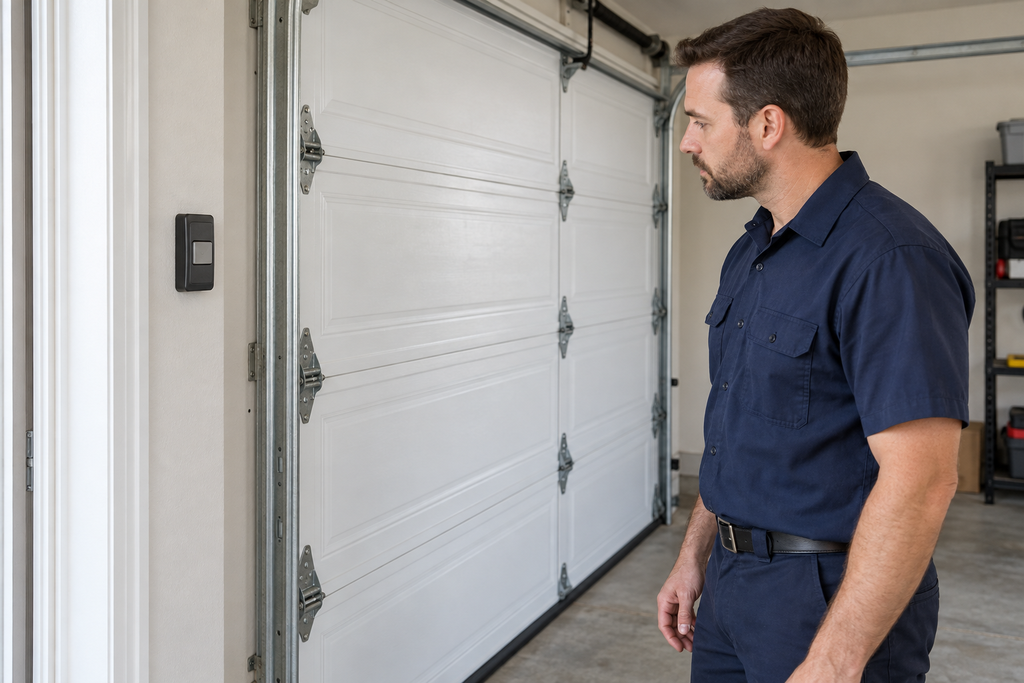
Look at the wall control without removing its cover. Does the button appear stuck, cracked, or damaged? From floor level, check accessible wiring for obvious cuts, crushed sections, or loose hanging wires.
Do not touch exposed conductors or disconnect wires at the opener to experiment. A technician can isolate the control circuit and determine whether the button, cable, or another component needs replacement.
When requesting Garage Door Repair, describe any recent work near the wiring. For example, installing shelves or moving stored equipment may provide useful context if the problem began shortly afterward.
Replacing the wall button without checking its wiring may leave the underlying fault unresolved.
An Unwanted Remote Is Programmed to the Opener
Sometimes the opener receives a valid command from a remote the homeowner does not recognize or no longer controls.
This can become relevant after moving into a home, losing a remote, or programming additional devices. Chamberlain specifically notes that a neighbor’s remote can sometimes be inadvertently programmed to an opener. That is different from assuming any nearby remote can operate your door simply because it uses radio signals.
What to check and how to fix it
List the remotes, wireless keypads, and vehicle controls that should operate your door. If a remote is missing or the access history is uncertain, consult your model’s manual about erasing learned devices and programming only the ones you intend to use.
Reset procedures vary. Avoid following generic button-holding instructions without checking the manufacturer’s directions, because different actions may clear different settings.
Have all intended devices available before starting. If you are unsure which controls will stop working, ask a technician to handle the reset and confirm that each authorized device operates correctly afterward.
Someone or Something Is Sending a Smart-Access Command
A connected garage door opener can receive commands through an app or another supported access service. The door may appear to open by itself when a household member or another authorized user operates it remotely.
For example, myQ supports remote opening and closing, activity notifications, and shared access. Its user guidance describes permissions that allow certain users to control devices and view history.
What to check and how to fix it
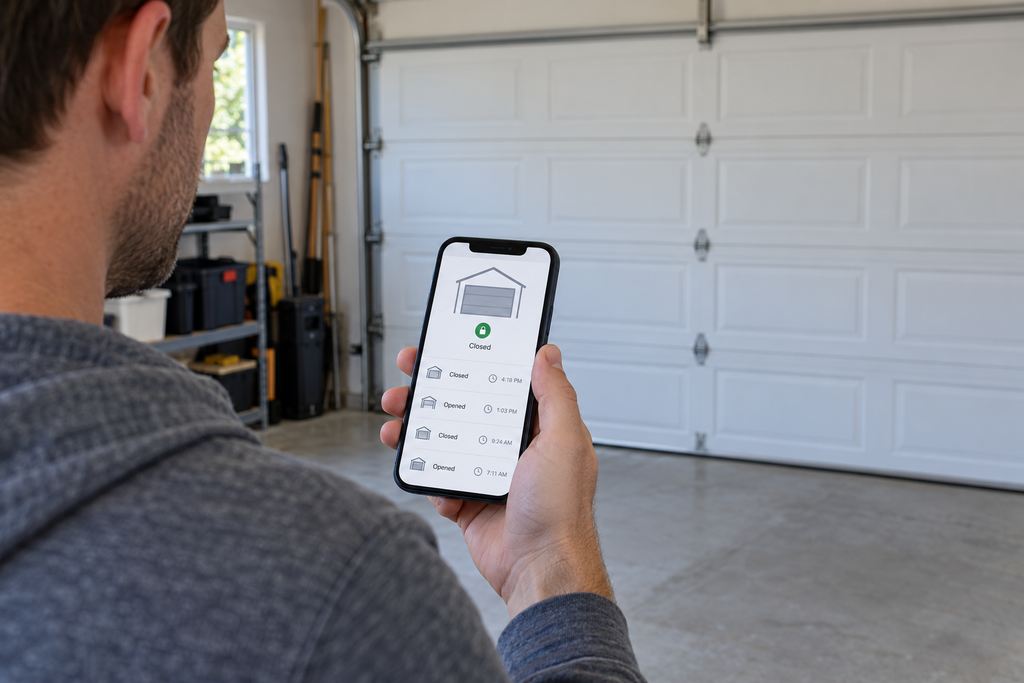
Review the activity history available in your app and compare event times with what you observed. Ask household members whether they used the app at those times.
Check:
- Shared users who still have access.
- Connected services you no longer use.
- Any supported routines or automations.
- Whether you selected the correct door in an account with multiple devices.
Remove access that is no longer needed and secure the account if you see unfamiliar activity.
Do not assume every garage app supports scheduled opening. For example, myQ advertises schedules for closing garage doors; that feature alone does not explain an unexpected opening. Review the capabilities of your particular system.
Keep notifications enabled if available, but remember that alerts help you notice activity; they do not repair a hardware fault.
The Door Is Reversing Because of an Obstruction or Incorrect Settings
If the door starts closing and then goes back up, it may be responding to a safety condition rather than receiving an unexpected opening command.
Genie’s frequently asked questions identify an obstruction or a safety-beam issue as possible reasons a door reverses while closing.
What to check and how to fix it
With the door stationary and everyone clear of the opening, look for boxes, garden tools, debris, or other objects in its path. Check whether something blocks either sensor near the bottom of the opening.
You can gently clean accessible sensor lenses with a soft cloth and compare their indicator lights with the instructions in your owner’s manual. Do not bypass the sensors or hold them out of position to make the door close.
If the door reaches the floor and immediately reverses, the closing travel setting may need attention. Chamberlain provides separate troubleshooting guidance for this specific behavior.
Travel settings tell the opener where to stop. Have them checked according to the model’s instructions, particularly if the door presses against the floor before reversing.
Do not increase closing force to overcome resistance. If the door binds, moves unevenly, or makes new grinding noises, arrange an inspection of the door and opener together.
The Opener Has an Electronic Fault
An internal electronic problem is another possibility, particularly when unexpected operation occurs alongside other unusual behavior.
Genie notes that erratic operation, remote or keypad failures, and problems with opener lights can indicate circuit-board damage. These symptoms warrant diagnosis; they do not establish that the board is definitely the cause.
What to check and how to fix it
Write down any error codes, flashing-light patterns, and changes in operation. Note whether the issue began after a power event or water entered the area around the opener.
Leave removal of the motor-unit cover and electrical testing to a qualified professional. The technician can check external controls before deciding whether an internal component needs replacement.
Ask for a written comparison if both repair and opener replacement are reasonable options. Useful questions include:
- Which fault has been identified?
- Is a compatible replacement part available?
- What warranty applies to the repair?
- Does the existing door operate properly?
Replacing the opener does not automatically require replacing the garage door itself.
What to Do Until the Problem Is Fixed
An unpredictably operating door should not be left running unattended while you try different fixes. Keep children, pets, and vehicles clear of the opening.
If the door is fully closed, follow the manufacturer’s instructions for disabling the opener until service is available. Be aware that a battery-backup model may remain operational after its mains power is disconnected.
Do not pull the emergency release on an open or partly open door if you suspect a mechanical problem. Weak or broken springs can allow a disconnected door to fall unexpectedly.
If the door is stuck open, hanging unevenly, or cannot be secured, contact Love Garage Doors about a Garage Door Emergency. Explain its current position and whether you see damaged cables, springs, or tracks.
A technician can determine whether the problem is limited to the controls or opener. If the door also has substantial damage, ask whether Garage Door Replacement would address those separate issues. Any proposed Garage Door Installation should include compatible hardware and checks of the completed system.
Get Help With a Garage Door That Opens by Itself in Wichita
A garage door that opens randomly needs a clear diagnosis. Start by distinguishing an unexpected opening from a closing reversal, then check accessible remotes, review smart-access activity, and note visible problems without handling electrical or spring components.
Love Garage Doors, LLC is a full-service Garage Door Company serving Wichita, KS. If your door keeps opening on its own or reverses when you try to close it, request an inspection and discuss the appropriate repair.
Frequently Asked Questions
Why does my garage door open by itself at night?
A garage door that opens by itself at night may have a stuck remote button, faulty wall-control wiring, or an unintended smart-access command. Nighttime itself is not necessarily the cause, although temperature changes can sometimes affect damaged electrical connections. Check available activity logs and arrange an inspection if the problem continues.
Can a neighbor’s garage door remote open my garage door?
A neighbor’s remote may activate your garage door if it has accidentally been programmed to your opener. Simply using a nearby remote does not normally grant access to a modern system. If you suspect unauthorized access, erase previously programmed devices according to the manufacturer’s instructions and reconnect only authorized remotes.
Why does my garage door close and then open again?
If your garage door reverses while closing, the problem may involve blocked safety sensors, misaligned photo eyes, an obstruction, or incorrect travel settings. Check the doorway for visible obstructions and gently clean the sensor lenses. If the door continues reversing, have a technician inspect the opener and door mechanism.
Will unplugging my garage door opener stop it from opening randomly?
Disconnecting power can temporarily prevent an opener without battery backup from activating unexpectedly. However, models with battery backup may continue operating. Follow your manufacturer’s shutdown instructions and make sure the garage is secure. Unplugging the opener does not resolve the underlying electrical or control problem.
When should I schedule garage door opener repair in Wichita, KS?
Schedule professional garage door opener repair in Wichita, KS, if your door repeatedly opens without a command, reverses unexpectedly, or shows signs of damaged wiring or electronic malfunction. Love Garage Doors can inspect the controls, opener, and door mechanism to identify the cause and recommend an appropriate repair.