
How Long Do Garage Door Springs Last? Signs Yours Is About to Break
Garage door springs often go unnoticed until the door struggles to open or a loud bang comes from the garage. For Wichita homeowners who use the garage as their main entrance, a spring failure can interrupt school runs, work trips, and everyday errands.
Many residential garage door springs are rated for around 10,000 opening-and-closing cycles. At three to four cycles per day, that works out to approximately seven to nine years. Actual life varies with the spring specifications, installation, maintenance, and operating conditions. Amarr identifies 10,000 cycles as a common residential spring rating in its guide to garage door springs.
Knowing the warning signs helps you decide when to arrange an inspection. However, a spring can break without an obvious warning, and some symptoms mean it has already failed. This guide explains the difference and what to do next.
How Long Do Garage Door Springs Last in Everyday Use?
A cycle means opening the garage door and closing it again. Opening and closing it when you leave, then repeating that when you return, uses two cycles.
That distinction matters when estimating garage door spring lifespan. A household with several drivers may use the same door much more frequently than a household that mainly enters through the front door.
For a spring rated at 10,000 cycles, the following calculations illustrate how usage changes the timeline:
| Complete cycles per day | Approximate time to reach 10,000 cycles |
| 2 | 13.7 years |
| 3 | 9.1 years |
| 4 | 6.8 years |
| 6 | 4.6 years |
| 8 | 3.4 years |
These figures divide 10,000 by daily cycles and 365 days. They are planning estimates, not promises that a spring will last that long. A spring may fail earlier, and reaching its rated cycle count does not establish an exact failure date.
If you know when your springs were installed, check the invoice for their cycle rating. If the paperwork is missing, ask a technician to assess the system instead of assuming every spring has the same specification. The age of the garage door alone will not tell you the age of its springs, particularly if previous owners arranged repairs.
Torsion Springs and Extension Springs Explained
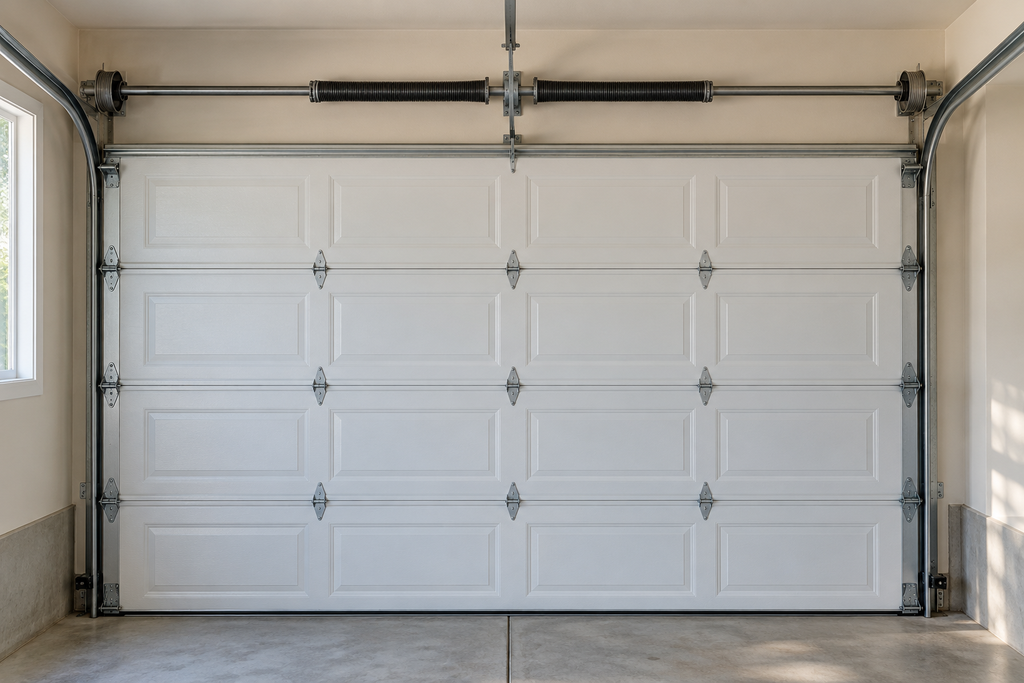
Garage door springs help balance the door’s weight. The opener moves the door, but it depends on a functioning spring system to do so properly.
Torsion springs typically sit on a shaft above the garage door opening. They store energy through twisting. Extension springs generally run beside the horizontal tracks and store energy by stretching. Clopay explains both designs in its garage door spring guide.
You do not need to identify every component before requesting service. A description of what happened, whether the door is open or closed, and any safely taken photos can give the technician useful context.
When comparing replacements, ask about the actual cycle rating and compatibility with your door. A label such as “heavy duty” provides less useful information than a documented rating, a clear warranty, and confirmation that the spring matches the system.
What Can Shorten Garage Door Spring Lifespan?
Frequency of use is only part of the picture. A correctly selected spring also needs proper installation and care.
Rust and moisture
Rust can weaken spring wire. The Door & Access Systems Manufacturers Association, or DASMA, explains that corrosion can create pits where fatigue cracks develop. Visible corrosion deserves attention even if the door still moves.
Incorrect spring selection or adjustment
A replacement must match the door’s requirements. Incorrect spring selection or tension can affect balance, operation, and component life. Adding weight to a door may also change those requirements, so discuss planned modifications with a technician first.
Environmental exposure and missed maintenance
DASMA’s technical guidance on spring cycle life identifies climate exposure and maintenance as additional factors. Follow the door manufacturer’s care instructions and address water entering the garage. Wichita homeowners should base replacement decisions on usage and condition rather than assuming a particular season determines when springs will fail.
Keeping installation dates and service records makes future decisions easier. Bring that information to an inspection, especially if a spring has failed sooner than expected.
Signs Your Garage Door Springs Need Attention
Several symptoms can point to spring trouble, but they can also involve cables, tracks, rollers, or the opener. An inspection should identify the cause before parts are replaced.
The door moves unevenly or jerks
A new change in movement is worth investigating. If one side rises differently or the door appears crooked, stop operating it. Do not repeatedly cycle it to see whether it straightens out.
The door feels unusually heavy
If you have already noticed unusual weight during normal manual use, tell the technician. Do not deliberately lift a suspect door to test its springs. Clopay lists difficult manual operation, uneven movement, and visible damage among the signs of spring problems.
New noises persist
A squeak alone does not prove a spring is about to break. DASMA notes that spring noise can occur during normal use. Persistent or changing noises warrant attention, particularly when accompanied by rough movement. Avoid diagnosing the problem from sound alone.
You can see damaged components
Observe from a safe position without touching the spring system. Note visible deformation, corrosion, or frayed cables. Report what you see rather than trying to tighten or reposition anything.
For homeowners seeking Garage Door Repair in Wichita, describing when the symptoms started and whether they appeared suddenly can help guide the initial assessment.
Signs a Garage Door Spring Has Already Broken
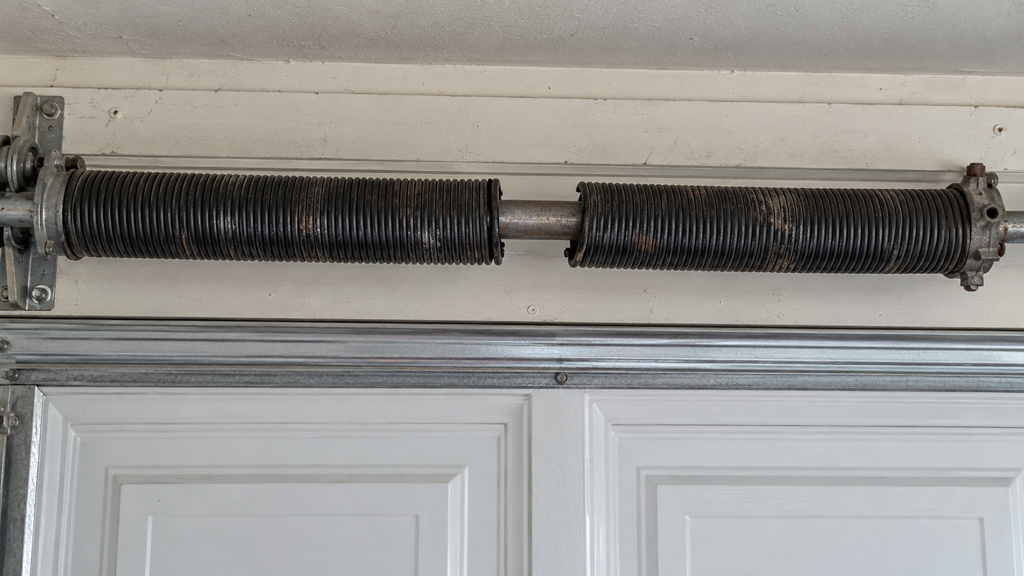
Some symptoms go beyond possible wear. A sudden loud bang followed by a door that will not open can indicate a broken spring. On an exposed torsion spring, a distinct gap separating the coil into two pieces is a visible sign of breakage. Clopay illustrates this in its broken spring guide.
Another possible symptom is a door that rises only a few inches before stopping. Clopay includes this behavior in its garage door repair guidance. It does not prove a spring is the only problem, but it is a reason to stop trying the opener.
Do not increase the opener’s force settings to overcome resistance. A motor adjustment cannot restore a broken spring’s support. Likewise, a door with two springs should not continue operating simply because one appears intact.
When requesting help, explain whether the door is fully closed, partly open, or hanging unevenly. Those details help communicate the immediate situation without requiring you to perform a risky test.
What Should You Do When a Garage Door Spring Breaks?
Stop using the door and keep people and pets away from the opening. If the door is closed, leave it closed until a technician assesses it. Use another entrance where possible.
If the door is open or partly open, do not walk underneath it, attempt to force it down, or pull the emergency release cord. LiftMaster’s operating instructions warn that weak or broken springs can allow an open door to fall rapidly when disconnected from the opener.
Spring replacement involves stored tension and components that must be selected and adjusted correctly. Leave springs, cables, and bottom brackets to a trained technician.
When contacting Love Garage Doors about a Garage Door Emergency, include your Wichita location, the door’s current position, and whether a vehicle is trapped inside. Ask about availability and the next steps for your situation.
Should You Replace One Spring, Both Springs, or the Door?
A broken spring does not automatically mean the whole garage door needs replacement. The decision should reflect the condition of the complete system and the reason for the failure.
Replacing springs together
For a door with two springs, DASMA recommends replacing both when one fails. Springs installed together have usually experienced similar use. Its garage door safety guidance also recommends professional assessment of older springs.
Ask the technician to explain the proposed work and list the replacement parts in the estimate. Confirm whether the quote includes labor, related adjustments, and a final operational check. Clarify what the warranty covers and whether labor coverage differs from parts coverage.
Considering the complete door
If the door also has substantial panel damage or recurring mechanical problems, request a comparison between repairing it and Garage Door Replacement. Ask which existing problems each option would resolve.
For a new door, discuss Garage Door Installation as a complete system, including compatible springs and hardware. Compare the written scope of work rather than choosing solely by the headline price.
Asking about higher-cycle springs
If your garage is the household’s main entrance, ask whether a higher-cycle spring option is suitable and available. Explain your daily usage so the installer can recommend an appropriate specification. Consider the additional cost alongside the warranty and your expected time in the home.
How Can You Care for Garage Door Springs?
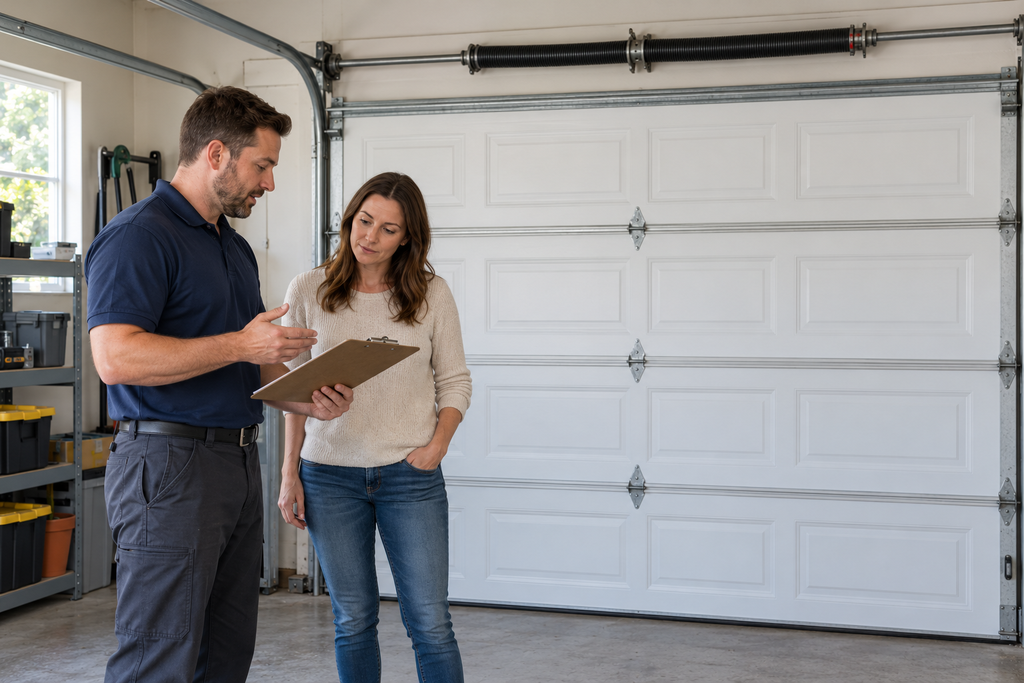
Follow your manufacturer’s maintenance schedule and arrange professional service when operation changes. DASMA recommends annual technician visits alongside routine homeowner safety checks.
For lubrication, use only the product and application method specified for your system. Maintenance cannot repair a fracture or make a damaged spring safe. If you suspect a failure, stop using the door and request service instead of applying lubricant and testing it repeatedly.
Ask the technician to review the condition of the springs and associated hardware. If your system uses extension springs, confirm that the required safety cables are present. DASMA explains that these cables help contain a spring if it breaks.
You can also keep a simple service record with installation dates, spring specifications, and invoices. If daily usage changes because another driver starts using the garage, mention that at the next appointment. Accurate information is more useful than guessing how many years the springs have left.
Arrange Garage Door Spring Service in Wichita
Garage door spring lifespan depends on cycles, condition, and correct installation. Watch for changes in movement, persistent noise, and visible damage, but remember that a spring may fail without giving a clear warning.
Love Garage Doors, LLC is a full-service Garage Door Company serving Wichita, KS, with repair, replacement, installation, and maintenance services. If your door is struggling or you suspect a broken spring, request an inspection and discuss the appropriate repair. Leave a suspected damaged door unused until it has been assessed.
Frequently Asked Questions
How many cycles do high-cycle garage door springs last?
High-cycle garage door springs are commonly rated for 20,000 to 30,000 opening-and-closing cycles, compared with approximately 10,000 cycles for standard residential springs. They can be a practical upgrade for households that use their garage frequently. Actual lifespan depends on proper spring selection, installation, maintenance, and daily usage.
Do insulated garage doors require different springs?
Insulated garage doors may require different spring specifications because additional insulation and construction materials can increase the door’s weight. Springs must be matched to the actual door weight and operating system. If you add insulation or replace existing panels, have a qualified technician check whether the current springs remain suitable.
Can a faulty garage door opener shorten spring lifespan?
A malfunctioning garage door opener can place additional stress on the door system, particularly when travel settings are incorrect or the door is not properly balanced. However, spring lifespan primarily depends on cycle ratings, spring selection, and operating conditions. Have both the opener and spring system inspected if the door begins moving unevenly or resisting operation.
How much does garage door spring replacement cost in Wichita, KS?
Garage door spring replacement costs in Wichita depend on the type and number of springs, their specifications, labor requirements, and any additional repairs. Higher-cycle springs may cost more initially. Love Garage Doors can inspect your system and provide an estimate based on the parts and work your garage door actually needs.
Can a broken garage door spring damage the garage door opener?
Yes. When a garage door spring breaks, the opener may be forced to move a door that is no longer properly counterbalanced. Attempting to operate it can strain the motor and other components. Stop using the door and arrange professional garage door spring repair before operating the system again.